A Notebook for Small Discoveries
A simple page can record observations, questions and ideas to revisit at home or in the classroom.
3 min read
A discovery notebook does not need to look polished or feel complete. Stapled pages, an old exercise book or a shared folder will do. The most useful rule is to leave room for different traces: words, drawings, symbols and questions.
For each observation, note when it happened, what caught your attention and what you are wondering about. Adding a date makes it possible to return to the same subject and compare what has changed over time.
For gathering discoveries and examples in a documented learning path, HOME SCHOOL ICE®: A Parents' Guide to Education from 5 to 14 Years | Annual Objectives, Curriculums, Experiences and Tools for Family Learning includes portfolios and practical tools for families.
At home, a family can collect a curiosity that came up during the day. In class, a teacher can let each person contribute a word or an image without asking everyone to participate in the same way.
Opening a page again a few days later creates a thread between experiences. We can add a tentative answer, a new drawing or a more precise question: discovery continues after the first activity ends.
From the catalogue
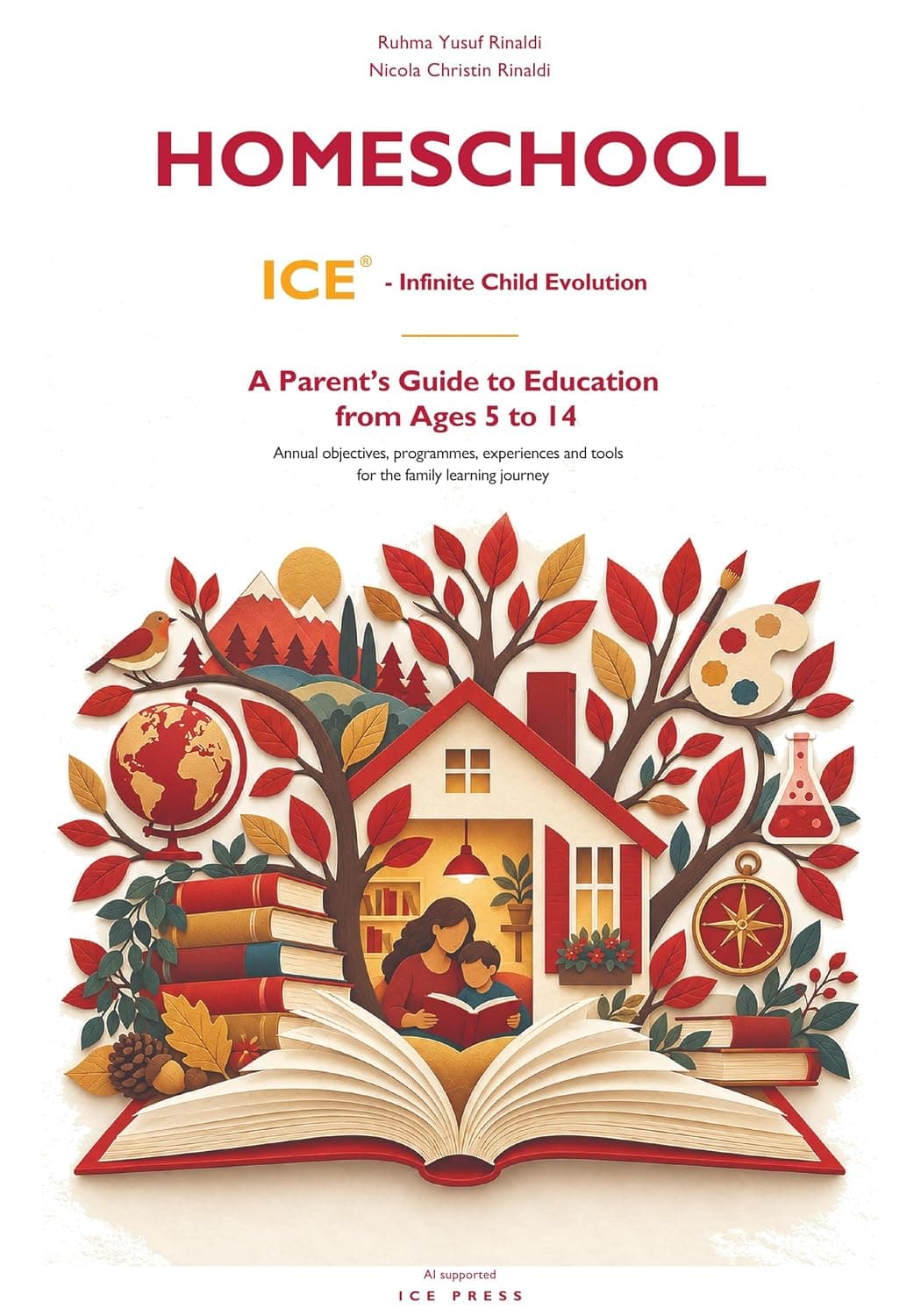
HOME SCHOOL ICE®: A Parents' Guide to Education from 5 to 14 Years | Annual Objectives, Curriculums, Experiences and Tools for Family Learning
An operational family-learning guide connecting annual objectives, age-based pathways, interdisciplinary projects, portfolios and practical tools for ages 5 to 14.
Buy on Amazon