How Can We Help a Child Name Their Feelings?
Listening, open questions and a creative activity can help children and adults explore feelings without searching for a perfect answer.
4 min read
When a child feels angry, disappointed or joyful, it can help to start with what they say and show. Reflect their words in a simple way: “You were sad when playtime ended.” Try not to turn one moment into a label about who they are, or rush to correct the feeling.
Open questions leave more room than ones that expect a yes or no. “What part of today stayed with you?” or “Is there anything you wish had gone differently?” may begin a conversation, but there is no need to ask them all. A pause after a question shows there is time to think.
Colour and drawing can offer another starting point: “If this feeling had a colour or a shape, what might it be?” There is no right way to show what a feeling is like.
To use colour and drawing as a prompt for conversation, Feelings in Colors can accompany the activity: a child can choose what the picture means, or decide not to explain it.
At home, try a conversation during a walk or while tidying up; it does not need a special setup. In a classroom, a sheet of paper, a few words to choose from or a quiet corner may be enough. In either setting, staying quiet, changing the subject or sitting the activity out are all valid choices.
There is no need to find the exact word or turn every feeling into an explanation. Listening, asking one curious question and letting the child choose whether to continue are practical ways to stay connected.
From the catalogue
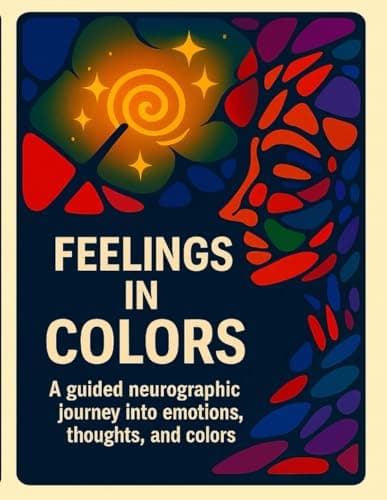
Feelings in Colors
A mindful colouring journey through twenty-five emotions for children, teens and adults.
Buy on Amazon