An Error Leaves a Clue: Learning from Attempts
Looking back at an attempt without rushing can show which strategy to keep, change or try next.
3 min read
An attempt that does not turn out as we hoped still leaves a clue. It can show the idea we had in mind, the steps we chose and the point where the result took a different direction.
With a child, we can revisit that moment together without turning it into a judgment. “What were you trying to do?”, “Which part worked?” and “What could you try now?” make the mistake observable and open another possibility.
A correction also carries information. If a structure falls, for example, compare the base used in two attempts, change one element and see what happens. The comparison is more useful when the child can explain their choice.
To pair attempts with exercises in attention and critical thinking, MENTELAB brings together logic games and neurocognitive activities.
Not every attempt needs to become a tidy lesson. Sometimes it helps to pause, draw the step or return to it later. The experience stays available as a clue to reread, rather than a label attached to the child.
From the catalogue
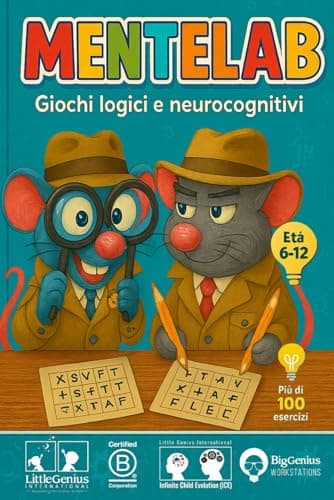
MENTELAB
Logic games, neurocognitive exercises and activities to train attention, memory, concentration and critical thinking.
Buy on Amazon