Reading Faces, Finding Words for Feelings
An illustrated face can begin a small inquiry: notice details, compare interpretations and find words for different feelings.
5 min read
In class, an illustrated page can begin a short workshop. Before naming a feeling, invite children to notice details: the shape of a mouth, the eyebrows, the gaze or the way a body is turned.
Then gather several possibilities without turning them into a quiz: “What do you notice?”, “Which clue makes you think that?” and “What other story could explain this face?” Different interpretations can stay on the board together.
At this point, shift the discussion from answers to clues: which details support one possibility? What might suggest a different story?
The illustrations and activities in Little Faces BIG FEELINGS offer a starting point for noticing how faces can suggest feelings. The drawing does not label the child taking part: each reader can offer a word, revise it or choose not to answer.
Build a small word bank together, bringing words such as “puzzled”, “relieved”, “worried” and “proud” into the conversation. Compare the shades between nearby words and ask which details in the illustration shaped each choice.
Finally, invite the class to imagine a situation for the character and respond with a caption, a short dialogue or a word map. Do not ask for personal stories: children can observe, pass their turn or choose another activity.
From the catalogue
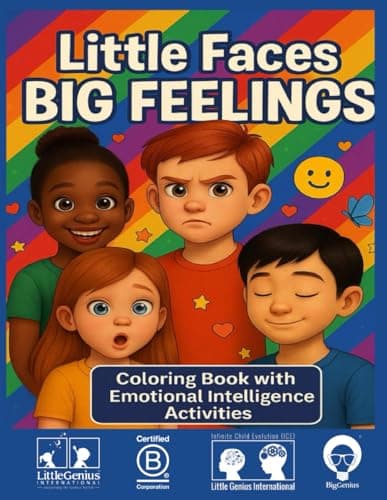
Little Faces BIG FEELINGS
A colouring and activity book to help children recognise, express and manage emotions.
Buy on Amazon